



(Photo by OrbitalVoid49)
We are well into this largest and longest FIFA men’s World Cup. Before it kicked off in Mexico City on June 11, there was intense media and public discussion of its geopolitics.
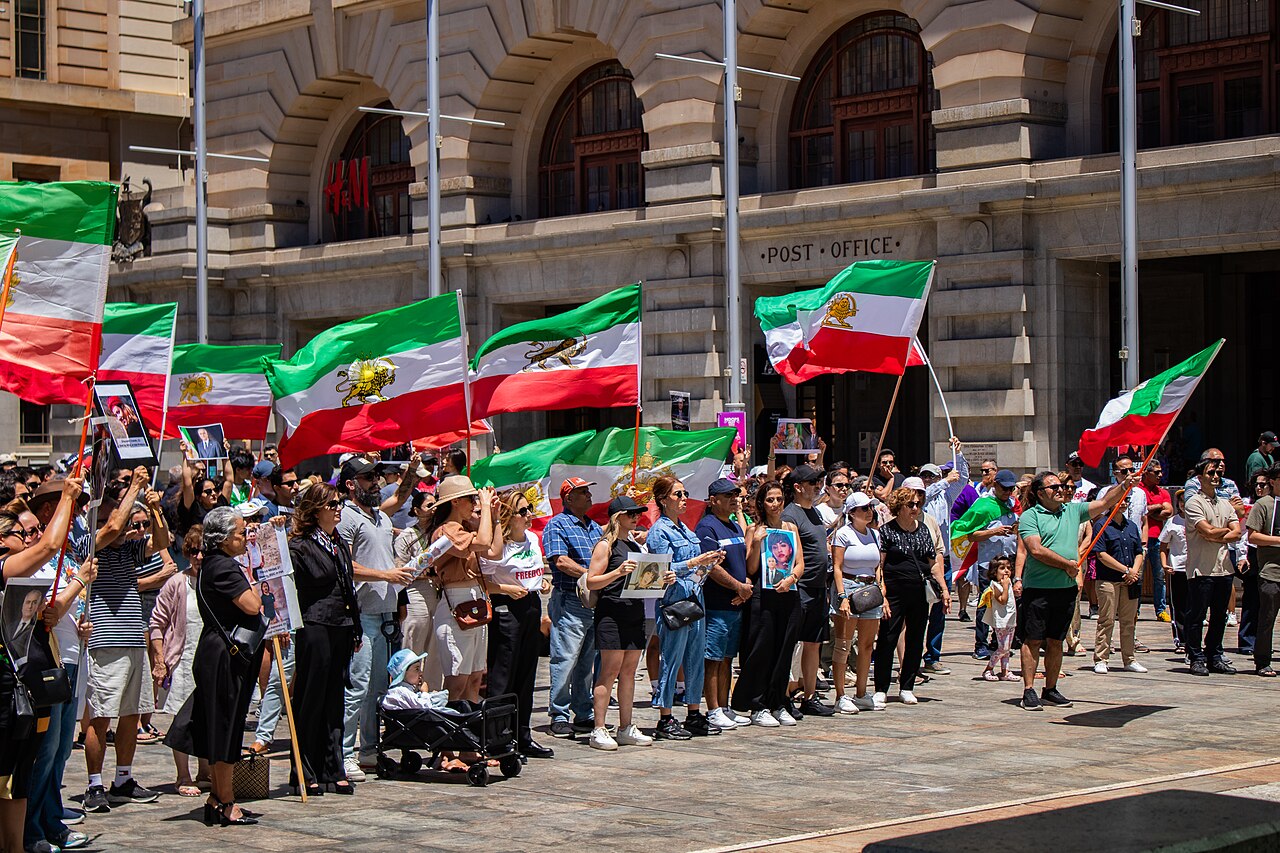
After all, it is the first to have a co-host (the United States) engaged in open military combat with one of the participating FIFA members (Iran). This tension is accompanied by several others, not least between the US and the other hosts, Mexico and Canada.
The second Trump administration has also picked a series of fights with many of the world’s nations.
Critical commentary about the prospects of a conflict-ridden World Cup was, for these reasons, widely spread across the world’s media after Trump returned to power in 2025.
Let the games begin
As the games have got going, though, the tide of World Cup political commentary has notably receded. The absence of any major incidents involving visiting teams and fans at the time of writing has directed most eyes towards the on-field games and off-field fun.
What does this unfolding story tell us about the rhythms of media and public attention at a global extravaganza like the World Cup?
The downplaying of politics is, in fact, no big surprise. The various stages of a mega sport event present variable opportunities to focus on sporting, social, political, cultural and environmental issues. They unfold as the four-part sequence of: host bid, event lead-up, sporting action and legacy.
These rhythms of concentrated attention are well understood by the various parties involved in trying to set the public agenda of a gigantic sporting carnival.
World governing bodies like FIFA and the International Olympic Committee (IOC), and the hosts, are most vulnerable to moral and ethical criticism before sporting competition commences. At that point, the most compelling subjects – athletes’ performances, exciting contests and the responses to them – are yet to be formed as compelling narratives.
By contrast, before the teams take the field, historical and contemporary issues can dominate the frame. These include:
- expenditure of scarce public funds
- player and fan exploitation
- political oppression
- human rights
- institutional inequalities
- “sportswashing”
- and environmental consequences.
The journalists who cover the tournament, especially those travelling to the venues, usually have some time to file so-called “colour stories” before sport takes centre stage. Primed by preceding political debates, they are able to explore these broader matters with the authority of “on the spot” reportage.
But there is no escaping the reality that World Cups and Olympics are global cultural events for sporting rather than political reasons. If sport lacked a deep appeal to those who practise and watch it, there could be no grand spectacle in the first place.
Ethics and fandom
Critical social science and humanities researchers have historically challenged the comforting myth that sport is an apolitical escape from everyday social struggles. But it is a difficult task to recognise the legitimate pleasures of soccer and other sports while simultaneously highlighting their negative consequences.
It may be unwelcome to point out to fans the stadium they are occupying or watching on screen was built at the cost of many migrant worker lives – as was the case of the 2022 Qatar men’s World Cup. Or that, at Qatar and the 2018 Russia men’s World Cup, LGBTQIA+ players, officials and fans who travelled to those countries were justifiably nervous about their safety.
In the 2026 edition, fans may not be too receptive to suggestions they bought FIFA-inflated tickets at the expense of the less affluent. Or occupied some of the seats of fans from the many countries with denied or restricted entry to the US.
Or that international visitors got tickets because many US-based fans of colour feared attending a “home” World Cup. Detention and deportation after running a gauntlet of Immigration and Customs Enforcement (ICE) agents loomed large as a threat, particularly for Hispanic people.
Intensifying such anxieties, even Africa’s best referee, the Somalian Omar Artan, was refused entry to the US on the eve of the World Cup.
Many fans are also unimpressed by the unedifying spectacle of FIFA President Gianni Infantino constantly flattering US President Donald Trump, apparently tarnishing rather than burnishing the tournament’s image.
But such reservations are generally set aside in making World Cup travel plans.
When political protests occurred before Mexico’s first home game to take advantage of World Cup-stimulated global profile, most media coverage was cursory at best. With 104 scheduled matches, it would take something genuinely dramatic – or tragic – to wrest the spotlight from the on-field action.
A juggling act for critical fans
It is a difficult juggling act to be both soccer fan and social critic. After tournaments start, it becomes even harder.
For critical fans the optimal time for geopolitical commentary is before the first goal is scored and after the post-tournament hangover takes hold.
David Rowe, Emeritus Professor of Cultural Research, Institute for Culture and Society, Western Sydney University
This article is republished from The Conversation under a Creative Commons license. Read the original article.