



Chaiyapak Siriwat, the CEO of the Southeast Asian Games Federation (SEAGF), had said earlier this week that Cambodia faces action for the partial withdrawal from the Games.
He claimed that Cambodia would not come away without consequences for its actions, which he admitted had added more problems for Thailand as the host country. He had said that there would be consideration of possible penalties, fines or other measures.
For all his bravado, nothing in the SEAGF Charter empowers any action on the decision by Cambodia to withdraw a number of sports from the Games starting next week in Thailand.
Football, judo, karate, pencak silat, petanque, wrestling, wushu and sepaktakraw are the sports that have confirmed their withdrawal from the biennial Games. Volleyball is said to have also withdrawn from the Games.
Cambodia, however, has confirmed its participation in the remaining 12 sports: swimming, athletics, e-sports, fencing, gymnastics, ju-jitsu, kickboxing, taekwondo, equestrian, jet ski, triathlon and teqball.
Chaiyapak had also falsely claimed that the International Sepak Takraw Federation (ISTAF) the Asian Sepak Takraw Federation (ASTAF) would ban Cambodia from next year’s Asian Games in Japan.
Not, unless both ISTAF and ASTAF had breached its own disciplinary rules that requires proper disciplinary procedures to be adhered to. No properly governed international sports federation would take action against a sport without giving it the right to defend itself.
ISTAF and ASTAF, when contacted on the so-called ban on Cambodia, said they were not aware of any such action.
It should be noted no show-cause letter was issued to the Cambodia Sepak Takraw Federation and neither has the two international bodies called for any meeting to initiate such action.
ASTAF, while providing technical assistance to the event at the SEA Games, does not have the legal authority in the matter of participation as they are not the organisers of the Games.
Only the SEAGF has the powers on participation of any teams at the Games, as entered by the respective member Olympic bodies.
And to be very clear the decision to register and withdraw from the Games was made by the National Olympic Committee of Cambodia (NOCC) and not by individual federations directly.
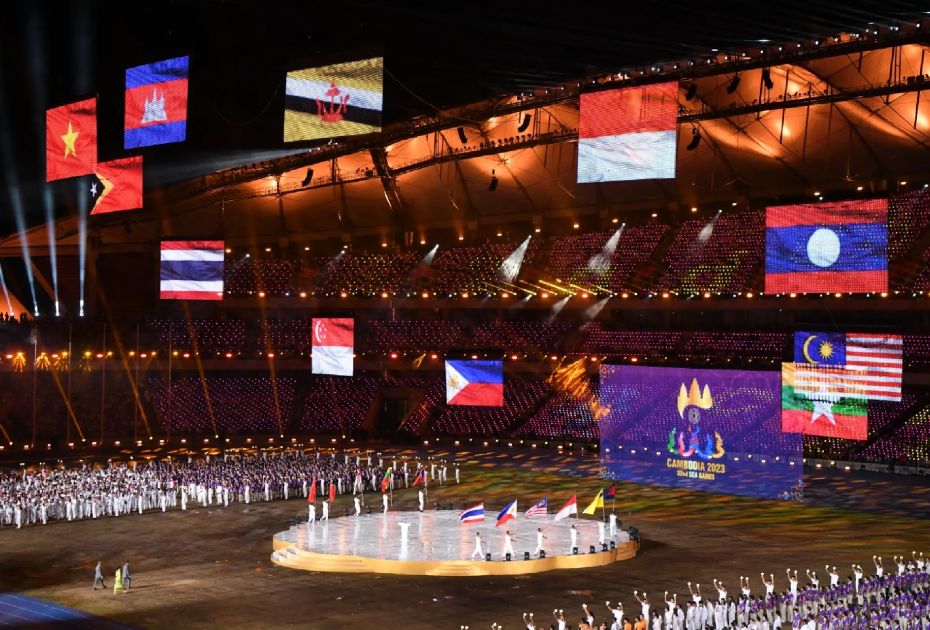
All participants at any SEA Games represent the respective national Olympic committees (NOC) and not individual federations. They only carry their respective national flags and NOC emblems on their official attire and not national sports federation emblems.
Article 18 of the SEA Games Charter clearly states this:
The NOC shall be the only official body in its own country for all matters connected with the SEA Games. All arrangements concerning the SEA Games and all communications on such matters shall be addressed to it.
It is baffling that the CEO of the SEAGF is unaware of the clause and is even tacitly encouraging other International Sports Federations to take action against the sports that were withdrawn by the SEAGF member itself.
Football may be the blue-riband event at the Games, but the Asean Football Confederation (AFC) has not included it as a ranking tournament. And the AFC are definitely not going to be dragged into taking action against Cambodia.
If at all the SEAGF wants to take action, it can only be made towards its own members, namely the NOCs, and not against any national sports federations.
There are many questions that Chaiyapak and the SEAGF needs to address before making such premature proclamations.
Was this matter discussed by the SEAGF Council, who are the supreme authority? Which specific clause in the SEA Games Charter did Cambodia breach? What are the approved sanctions for withdrawals? Was a show cause letter issued to the NOCC?
A thorough check of the SEA Games Charter clearly shows that there are absolutely no provisions of action against late withdrawals. To be fair, withdrawal just over two weeks before the start of the Games has never occurred before this. Hence the Catch-22 situation.
Unless the charter is amended, Chaiyapak is only blowing hot air. It will take 2/3 majorities to amend the Rules and Regulation by the Council and the by-laws by the executive committee respectively to include any sanction for such breaches.
It is highly unlikely that the SEAGF will push this agenda to punish Cambodia as it would only further fracture the situation. And to pre-date the enforcement would only portray malice.
To be fair clause 34.1 and 39 in the SEA Games Charter already has provisions on the continuation of the competition and late withdrawals.
Clause 34.1 reads:
A minimum of four (4) NOCs must participate in a sport or discipline or team event or in the case of an individual event, a minimum from three (3) NOCs for it to be included in the programme of the SEA Games, with a proviso to allow varying the same as and when required.
The withdrawal of Cambodian athletes has not affected the conduct of any specific events at the Games as there are still more than enough participation from other countries for the relevant events to continue.
Clause 39 states:
If at the time of submission of final entries by name, there is less than the required number of entries as stipulated under Rule 34.2, then the sports or discipline or event concerned shall be dropped from the Games Programme. The decision to delete any sport or discipline or event from the Games Programme shall be notified to all member countries by email/fax at least ten (10) calendar days before the date of the Opening Ceremony of the Games.
In the scenario that the partial withdrawal had resulted in any cancellation of events, the SEAGF could still send out a notice to all members today and resolve the matter amicably.
At a time when tensions are high with the border tensions, Cambodia was well within its rights to decide on the withdrawal. Even now, the general public are mostly against the full participation of Cambodia at the Games.
The SEAGF and the organisers should be more tactful and not make unwarranted claims to further soil the fragile situation.