


(Photo by Andrea Piacquadio)
What if much of what we thought we knew about women’s health and fitness was suddenly called into question?
Researchers in many fields of science, including my area of exercise physiology, are facing this scenario, after generations of research that either left out women participants altogether or significantly reduced their numbers in countless experiments.
These practices have continued to inform, perhaps mistakenly, our understanding of issues ranging from athletic performance to the benefits of exercise, where we have been left to presume it was OK to generalize results from testing men as if they applied to women and men equally.
These are not just old studies from back in the day when women were routinely excluded from many arenas. These are also studies from the past 20 years, when many people thought research was finally catching up.
Why women were left out of research studies
Leaving women out of scientific studies has largely been the result of uncertainty over how to account for potential fluctuations related to menstruation or hormonal birth control.
Not knowing how or whether these factors might affect, for example, muscle function, researchers simply included fewer women in their research, or didn’t include them at all, based on assumptions that turned out to be incorrect.
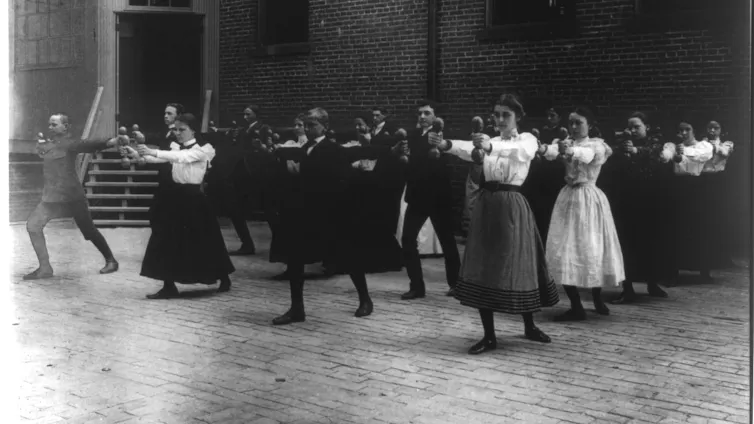
It’s hardly the first time. We look back to the times before women were allowed to complete in the Olympics, for example, when women were discouraged from participating in sports because it might damage their bodies or have negative outcomes for reproduction.
A particular piece of modern research broke the logjam in my field: the finding that menstrual cycles typically do not have significant impact on blood vessel function, nor are there meaningful muscle and performance differences between women who are using hormonal birth control and those who are not.
Those results helped us to move past a 1995 study that had found the opposite, and which researchers in my area had typically cited as the reason for excluding women, because the variables just seemed too complex and impractical to resolve. I was certainly one of them.
Questioning the assumption
In 2018, our new look into the validity of this reasoning came, as so many fresh ideas do, from students — graduate students Ninette Shenouda and Stacey Priest — who were curious about these bedrock assumptions, so we decided to look more deeply into them.
We took all the variables we study in our work, such as the health of blood vessels and the heart in exercise, and measured whether they were affected by the time of the menstrual cycle or the oral contraceptive cycle. It turned out there were no significant day-to-day differences.
Similar findings have now been made in several other areas of exercise physiology, including the impact of menstrual cycle phase on the responses to resistance exercise training.
We’d been leaving women out for no reason, and no one had bothered to check and see if that was justified. I was the dean of science at my university at the time, and it took a student to show me the way — a reminder that many perspectives make better science.
This new opening has left us facing a major knowledge gap, since we don’t know the areas where men and women are very similar, or where they may be very different.
I think about our colleagues in medicine and what they learned once they questioned some assumptions around heart attack research, for example. For far too long, we didn’t know that symptoms and outcomes can vary widely between women and men. Now that they are aware of these differences, they are improving the ways in which we care for women — and men too.
What else is out there waiting to be discovered?
Filling in blanks
For researchers, this problem is also an opportunity to know more and to discover helpful information that can improve the way we all live.
Today, we and increasing numbers of our colleagues at other institutions are catching up, filling in huge blanks in the scientific record and developing new information that everyone can rely on.
Some of it is revealing significant differences between women and men. Some of it is affirming areas where there are no significant differences. All of it is vital new knowledge.
Now that we’re addressing the barriers to the inclusion of women in research studies, we can start to broaden our work. We can compare women participants across the spectrum of the lifespan, for example.
I encourage everyone across other fields of science to do the same. Look at the measures you’re studying and see what you may have been missing.
Science has always changed and evolved as new evidence has become available. With this valuable new information in hand, it’s time to learn more — for everyone’s sake.
Maureen MacDonald, Professor of Kinesiology and Provost and Vice President Academic, McMaster University
This article is republished from The Conversation under a Creative Commons license. Read the original article.